Analyzing Player Engagement Metrics for Poker Variants in France's Digital Casino Landscape
Alex Perry · Aug 24, 2026
Analyzing Player Engagement Metrics for Poker Variants in France's Digital Casino Landscape
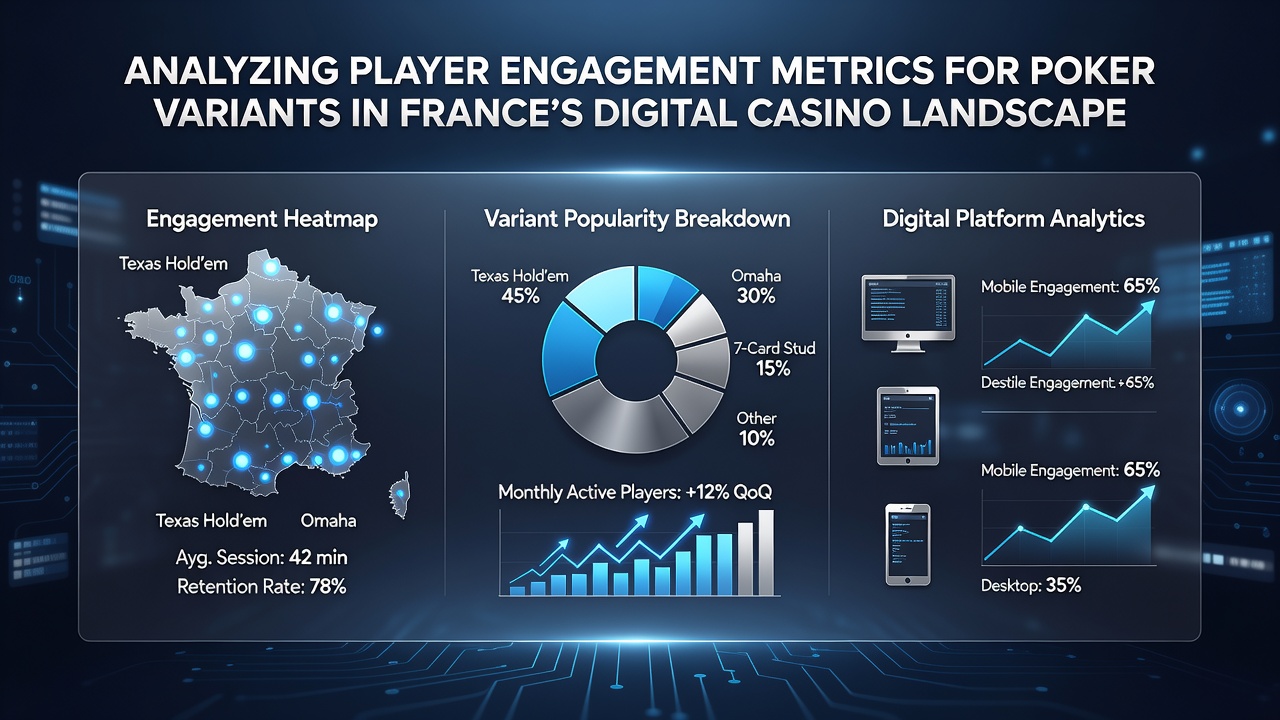
Data from France's regulated online gaming sector reveals distinct patterns in how players interact with different poker variants, with metrics such as average session length, hand frequency, and return visit rates forming the core of engagement analysis. The Autorité Nationale des Jeux tracks these indicators across licensed platforms, providing quarterly updates that highlight shifts in user behavior for games like Texas Hold'em, Pot-Limit Omaha, and Stud variants.
Core Metrics Driving Engagement Analysis
Session duration stands out as a primary measure, where operators record the time between login and logout alongside the number of hands played per visit. Research indicates that Texas Hold'em sessions often average longer continuous play periods compared to faster-paced variants, while multi-table formats show higher hand volumes within shorter windows. Retention rates, calculated as the percentage of players returning within seven days, further differentiate variants, with data showing stronger repeat engagement in formats that allow customizable table stakes.
Bet frequency and average wager size add another layer, since these figures correlate directly with time spent on platform. Studies from European gaming research groups demonstrate that players in No-Limit Hold'em tend to place more incremental bets per session than those in fixed-limit games, creating measurable differences in overall activity levels. Observers note that these patterns remain consistent even as platform interfaces evolve to include mobile-optimized tables.
Poker Variants and Their Distinct Engagement Profiles
Texas Hold'em continues to dominate participation numbers in the French market, yet engagement metrics reveal nuances across alternatives. Pot-Limit Omaha draws players who favor higher variance, resulting in elevated hand counts per hour but shorter overall session lengths according to aggregated platform logs. Researchers have tracked how these differences influence deposit frequency, with Omaha participants showing more frequent but smaller top-ups during extended play periods.
Seven-Card Stud and mixed-game rotations appear less frequently in the data yet produce unique retention signals. Players who engage with these variants often maintain longer gaps between sessions, while their per-session activity remains concentrated. In August 2026, the latest ANJ compliance reports noted stable growth in mixed-game tables, particularly among users accessing platforms through desktop clients rather than mobile applications.
Regulatory Context Shaping Data Collection
France's licensing framework requires operators to submit detailed engagement statistics to the ANJ, creating a centralized dataset that supports cross-platform comparisons. This structure allows analysts to isolate regional trends, such as higher evening activity peaks in major urban areas versus steadier daytime usage in other regions. The requirements also mandate transparent reporting of responsible gaming flags tied to engagement spikes, linking metric analysis directly to player protection protocols.

Industry associations including the European Gaming and Betting Association compile supplementary reports that place French figures alongside data from other regulated markets. These comparisons highlight how local rules on table minimums and bonus structures affect engagement differently than in jurisdictions with fewer restrictions on game pacing.
Technology and Measurement Tools
Modern tracking systems integrate heatmaps of table activity with individual player histories, enabling operators to segment users by preferred variant and playing style. Machine learning models process this information to predict churn risk based on declining hand frequency or reduced session duration, prompting targeted interventions such as variant-specific promotions. Data shows these tools have improved accuracy in forecasting return visits when calibrated against historical French market records.
Academic studies from institutions like the University of Nevada's gaming research center have examined similar datasets from multiple countries, confirming that variant-specific engagement follows comparable trajectories once regulatory variables are controlled. French platforms contribute anonymized subsets to such collaborative projects, expanding the available sample sizes for longitudinal analysis.
Conclusion
Player engagement metrics for poker variants in France's digital casino landscape continue to evolve alongside technological and regulatory developments. The combination of session-level data, retention tracking, and variant differentiation provides operators and regulators with actionable insights into user behavior patterns. Continued reporting from the ANJ and contributions to broader European datasets ensure these measurements remain grounded in verifiable statistics rather than isolated observations. As new table formats and interface options emerge, the same analytical frameworks will track how engagement shifts across the poker ecosystem.